The “Skin Barrier Repair” Routine That Got Rid of My Acne, Dry Skin, and Sensitivity
If your skin is breaking out, flaking, stinging, and refusing to glow all at the same time, the issue probably isn’t any one product. It’s your skin barrier. And what this simply means is that you need a skin barrier repair. Here you will learn how to tell if your skin barrier is compromised and the simple routine that brought mine back from the brink.
Some links in this post may be affiliate links, which means I may earn a small commission if you choose to purchase through them, at no extra cost to you. I only recommend products and ingredient categories I’d genuinely use myself.
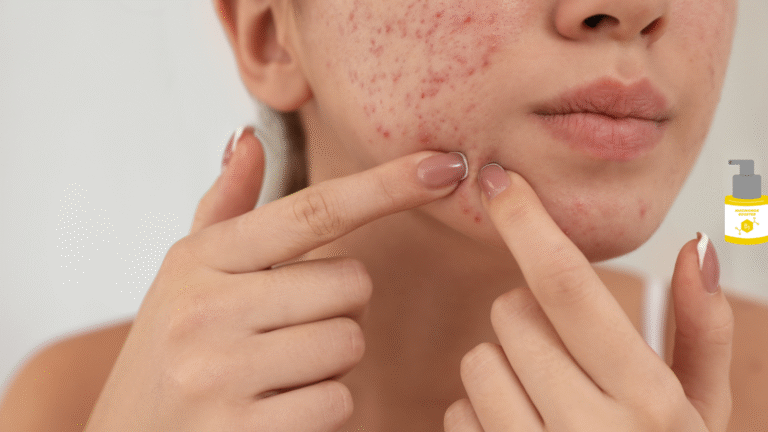
For months, my skin could not make up its mind. It was dry along the cheeks and oily down the T-zone. It broke out in small, stubborn bumps that never quite turned into real pimples but never went away either. Products that used to work suddenly burned. I did what most of us do: I bought more serums, tried a stronger acid, added a new retinoid, and figured a more “active” routine would fix an already overwhelmed face.
It made everything worse.
The turning point came when I stopped treating the symptoms and started treating the actual problem underneath them: a damaged skin barrier. Once I simplified my routine around my skin barrier repair instead of piling on more actives, my skin calmed down within two weeks and properly turned a corner within a month. This post walks through what the skin barrier is, how to recognize when it’s compromised, and the exact step-by-step routine that worked for me, along with the ingredients that genuinely earn a place in it.
Table of Contents
What the Skin Barrier Actually Does
Your skin barrier, also called the stratum corneum, is the outermost layer of your skin. Picture it like a brick wall: the “bricks” are skin cells, and the “mortar” holding them together is a mix of lipids, mainly ceramides, cholesterol, and fatty acids, in a roughly 3:1:1 ratio that scientists have identified as ideal for healthy skin.
This wall has one job: keep the outside world out and keep your hydration in. When it’s intact, it blocks irritants, allergens, pollution, and bacteria from getting in, while sealing water inside so your skin stays plump and comfortable. When it’s damaged, that wall develops gaps. Moisture escapes faster than your skin can replace it, and irritants slip in more easily than they should, which is exactly why a weakened barrier can leave skin dry and reactive on the surface while still being inflamed and breakout-prone underneath.
The short version: a healthy barrier is the reason good skincare actually works. When the barrier is compromised, even gentle products can sting, and even simple routines can stop delivering results. Fixing the barrier first is usually what makes everything else start working again.
Signs Your Skin Barrier Is Damaged
A compromised barrier doesn’t always look like one obvious thing. It tends to show up as a cluster of symptoms that seem unrelated until you realize they share a single root cause.
- Breakouts that won’t fully clear, even with treatment
- Stinging or burning with products you used to tolerate
- Skin that’s flaky and oily in different areas at once
- Persistent redness, tightness, or visible irritation
- A rough, dull texture that won’t reflect light evenly
If two or more of these sound familiar, especially the combination of dryness and breakouts together, your barrier is worth investigating before you reach for anything stronger.
What Usually Causes the Damage
Barrier damage is rarely caused by one bad product. It’s usually the slow accumulation of a few habits that each seem reasonable on their own:
- Over-exfoliating. Using physical scrubs, acids, and retinoids in the same week strips away the lipids your skin needs to stay sealed.
- Harsh, foaming cleansers. Sulfates and high-pH soaps can leave skin feeling “squeaky clean,” which is often a sign the barrier has just been stripped.
- Skincare stacking. Layering five or six active ingredients at once, especially without building tolerance gradually, overwhelms skin faster than it can adapt.
- Environmental stress. Wind, dry indoor heating, sun exposure, and pollution all chip away at barrier function over time.
- Chronic dehydration or poor sleep. Skin regenerates while you sleep and relies on adequate hydration to do that repair work efficiently.
The Skin Barrier Repair Routine, Step by Step
This is the exact sequence that worked for me, and it lines up with how dermatologists generally recommend approaching barrier repair: strip back to the essentials, reintroduce hydration, seal it in, and protect it every single day. No exfoliating acids, no retinoids, and no more than one new product at a time until your skin stabilizes.
Step 1 – A Gentle, Low-pH cleanser
The single biggest mistake I made was assuming a “deeper clean” would calm my breakouts. It did the opposite. Switching to a gentle, low-pH, sulfate-free cleanser stopped the stripping and let my barrier actually start to recover.
Sulfate-free, Low pH (around 5.5), Fragrance-free or low-fragrance, Amino acid or cream-based formula
Wash with lukewarm water, not hot, and resist the urge to use a cleansing brush or scrub during the repair phase.
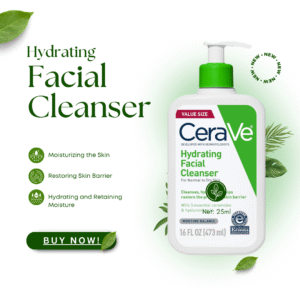
(Hydrating Gentle Cleanser Buy On Amazon)
Step 2 · AM & PM
A Hydrating, Humectant Serum
A damaged barrier almost always comes with dehydrated skin underneath, regardless of how oily the surface looks. Hyaluronic acid is a humectant, meaning it pulls water into the skin and holds onto it, which is why it shows up in nearly every dermatologist-recommended hydration step. Glycerin and panthenol (vitamin B5) work well alongside it.
Hyaluronic acid | Glycerin |Panthenol | Beta-glucan
Apply to slightly damp skin so the humectants have water to draw from, then move straight to your moisturizer before it fully dries.
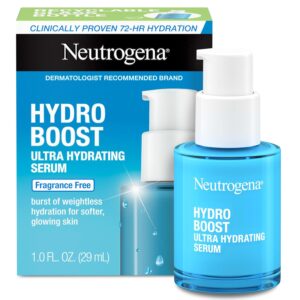
Step 3 · AM & PM
A Ceramide-Rich Barrier Repair Moisturizer
This is the step that made the real difference. Hydration brings water in; this step is what actually seals it there and rebuilds the lipid matrix. Look specifically for ceramides, since they’re identical to the lipids your skin naturally produces, paired with fatty acids and cholesterol to match that ideal 3:1:1 ratio mentioned earlier.
Ceramides (NP, AP, EOP) | Cholesterol | Fatty Acids | Niacinamide | Centella asiatica
Don’t be afraid of a richer texture here, even if your skin runs oily. A genuinely damaged barrier needs more lipid support than a typical lightweight gel can provide.
Find Ceramide Moisture Repair Products on Amazon
Step 4 · AM only, non-negotiable
Broad-Spectrum SPF, Every Single Day
You can do every other step perfectly and still stall your healing if you skip this one. UV exposure breaks down collagen and degrades the very lipids you’re trying to restore, so an unprotected barrier essentially never gets the chance to fully repair itself.
Choose a lightweight, non-greasy mineral or hybrid formula if you also struggle with breakouts. Reapply every two hours with direct sun exposure.
My pick: Lightweight Non-Greasy SPF 50
What to Stop Doing Immediately
Repairing a barrier is as much about subtraction as it is addition. While your skin is healing, pause these:
- Exfoliating acids and physical scrubs. Give your barrier at least two to four weeks off before slowly reintroducing them, once or twice a week at most.
- Retinoids. Pause until redness, flaking, and stinging have fully resolved, then reintroduce gradually.
- Layering too many actives. One new product at a time, with a few days to a week in between, so you can actually tell what’s helping and what isn’t.
- Hot water and long, hot showers. Heat accelerates moisture loss through the skin.
- Fragranced products. Fragrance is one of the most common irritants in compromised skin.
Supporting Your Skin From the Inside
Topical products matter most, but they aren’t the whole picture. A few habits made a noticeable difference in how quickly my skin bounced back:
- Drinking enough water consistently, rather than in one large catch-up dose, helps your body actually use that hydration.
- Getting enough omega-3 fatty acids, through fatty fish, walnuts, flaxseed, or a supplement, supports the same lipid pathways your skin barrier relies on.
- Prioritizing sleep, since most skin repair and regeneration happens overnight.
- Managing stress, as elevated cortisol has a documented link to both increased oil production and slower barrier recovery.
You’ll see plenty of claims online about chlorophyll drops, celery juice, or other “inner beauty” tonics clearing skin overnight. The honest answer is that the research on these is thin, and most of the visible improvement people report likely comes from the hydration and routine consistency that goes along with them, not the ingredient itself. They’re not harmful to try, but they’re not a substitute for the basics above.
Barrier repair isn’t instant, and everyone’s timeline will vary depending on how much damage has accumulated. Here’s roughly what to expect when you stay consistent:
Days 1–7
Less stinging, slightly less tightness. Products stop burning on application, and skin feels a little more comfortable day to day.
Days 7–14
Calmer breakouts, reduced redness. Active blemishes start to settle, and skin tone looks more even.
Weeks 3–4
Visible glow returns. Texture smooths out, oiliness and dryness stop competing, and products you paused start to work again because the barrier underneath can finally tolerate them.
Beyond 4 weeks
Maintenance phase. This is when you can slowly reintroduce actives like exfoliating acids or retinoids, one at a time, while keeping the core four steps in place.
A working skin barrier is what makes every other product in your routine actually do its job. Build that foundation first.
How long does it take to repair a damaged skin barrier?
Most people notice less stinging and redness within one to two weeks, with more visible improvements in texture and glow by the three- to four-week mark. More severe or long-standing damage can take six to eight weeks to fully resolve.
Can a damaged skin barrier cause acne?
Yes. When the barrier is compromised, irritants and bacteria can penetrate more easily, and inflammation increases, both of which can trigger or worsen breakouts. This is also why over-treating “acne” with harsh products sometimes makes it worse rather than better.
Should I stop using all my skincare while my barrier heals?
Not entirely. Strip down to a gentle cleanser, a hydrating serum, a ceramide moisturizer, and daily SPF, and pause exfoliating acids, retinoids, and anything fragranced until your skin calms down.
Is it normal for skin to be oily and dry at the same time?
Yes, and it’s actually a classic sign of barrier damage rather than a separate skin type issue. Oil glands often overproduce to compensate for water loss, which is why the skin can look shiny in some areas while feeling tight and flaky in others.
What ingredients should I avoid while repairing my skin barrier?
Avoid high concentrations of exfoliating acids (AHAs, BHAs), retinoids, denatured alcohol, and heavily fragranced formulas until your barrier has stabilized. Reintroduce them slowly and one at a time afterward.